


Bryce Canyon
Travel tips you can trust

Why
Bryce Canyon
is special
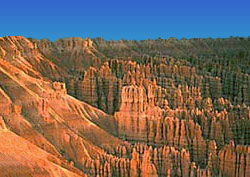
landscape bursting with colorful, unique bizarre-shaped rock formations. They come in many guises, including soaring fins and towering spires (nicknamed "hoodoos"). They proudly stand erect in huge natural depressions called amphitheaters.
Bryce Canyon
tips and insights
 When to come
May to mid-June and September to mid-October are ideal times to visit. The rest of the summer period can be overly packed with tourists. During the peak season, parking spaces at the lookouts become scarce. Do your sightseeing early or late in the day, or use the shuttle bus. Being at a viewpoint early in the morning or late in the afternoon has another advantage. The low-angled sun rays enrich the colors of the rocks.
Layout
Bryce Canyon is long and narrow, with a north-south orientation. The 30-kilometer (18-mile) main park road runs along its western rim.
Lookouts
There are over a dozen lookouts. The best are in the north (Sunrise, Sunset, Inspiration and Bryce).
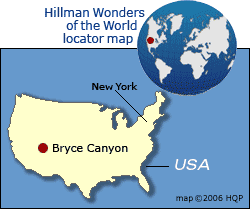
Location in America
Learn More
 for Bryce Canyon tips - Page 2
Learn my other
America tips & insights
America Wonders - Complete list
America wonder map
Top 10 Famous American foods


World's Top 100 Wonders
World's Top 1000 Wonders
Site map
My credentials
About my website and criteria
Reader testimonials