

Hawaii Volcanoes
National Park

candid America tips


Why the
Hawaii Volcanoes
National Park
is special

This vast and popular attraction on the island of Hawaii is home to Mauna Loa and Kilauea, two of the most active and exciting volcanoes in the world.


Hawaii Volcanoes

National Park
tips & insights


Mauna Loa

It last erupted in 1984 and is expected to do so again, likely within the next several decades.

Mauna Loa rises 4160 meters (13,677 feet) above sea level, but if you measure it from its base on the ocean floor, it's 9,400 meters (31,000 feet) tall, which is higher than Mount Everest.


Kilauea

Though considerably shorter than its sibling Mauna Loa, Kilauea attracts more tourists because it is the most active sizeable volcano on the planet. And, Kilauea is relatively safer in the minds of visitors because it's less likely to cataclysmically blow its top.

Kilauea means "spreading, much spewing" in Hawaiian, which accurately describes what it usually does.


Lava flows

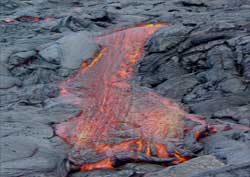
One of the leading sightseeing appeals is seeing live, scorching lava flows and, if you're lucky, gushing lava fountains.

Rather than wasting time driving around trying to find active lava flow, drop by the Visitor Center. The staff will tell you where the action is currently taking place.

Lava flows and fountains are visually more exciting after dusk. The molten lava intensely glows against the dark background.


Caldera Drive

The 11-mile Caldera Drive is the most popular excursion route, with the Halema'uma'u Crater Overlook its highlight. From that observation spot, your camera can simultaneously capture the crater's interior and, in the distance, mighty Mauna Loa.

Other interesting Caldera Drive stops include Thurston Lava Tube, Jagger Museum, Steaming Bluff and the viewpoint behind the Volcano House.


Chain of Craters Road

This is the second most popular excursion route. It descends from Kilauea to the coast until it dead ends at a hardened street-crossing lava flow. The round trip is approximately 75 kilometers (45 miles).


When to sightsee

To avoid tour-bus crush, sightsee before mid-morning or after mid-afternoon.


Geology

Mauna Loa and the neighboring Mauna Kea are gently, not sharply sloped as are most of the world's famous volcanoes. This is a geological characteristic of Hawaiian volcanoes.


Hiking trails

They are many and come in different persuasions, including those suited for simple-footers and backpackers.


Clothing

Wear layers of clothing because Hawaii Volcanoes National Park is a destination of extremes. On the same day, it's possible to walk on sandy tropical beaches and snow-covered terrain.


Polynesian Triangle

The Hawaiian Islands are the northern tip of a Pacific Ocean cultural zone known as the Polynesian Triangle (shown on map below). Easter Island and New Zealand define the other two tips.


sponsored ad 

Explore my
candid country, region
and other travel guides

Click links for tips & insights


©2010 HQP / Hillman Quality Publications