


Borobudur
Travel tips you can trust

Why
Borobudur
is special
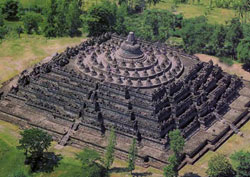
It is the world's largest Buddhist stupa. It's ten stories high and measures over 120 meters (400 feet) per side.
Borobudur
tips and insights
 Built then abandoned
It was constructed around the 8th century and, centuries later, was abandoned. Eventually, accumulated dirt and volcanic ash half buried Borobudur and wild vegetation covered the rest.
Reclaimed
A British colonial officer came upon the semi-hidden ruins in 1814. A minor restoration was made in the early 1900s. However, it was never repaired to a respectable degree until 1984, the year UNESCO finished its decade-long project. Borobudur was literally taken apart and reassembled stone block by stone block.
Terraces
Borobudur has nine concentric terraces. The six bottom ones are square, the three top ones are round.
Relief panels
The square terraces are trimmed with over 1000 Buddhist relief panels. They depict Buddhism scenes and are the site's greatest treasure. I spent a long time admiring them.
Bell-shaped stupas
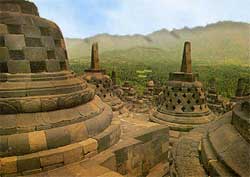
The round terraces are garnished with over 70 bell shaped stupas (see photo). Originally, each housed a statue of Buddha (and some still do).
Prayer ritual
Buddhist pilgrims have a praying ritual. The worshippers walk clockwise around Borobudur, one terrace at a time, starting at the bottom. Reaching the top of the monument is symbolic of attaining Nirvana.
Location

World's Top 100 Wonders
World's Top 1000 Wonders
Site map
My credentials
About my website and criteria
Reader testimonials