


Herculaneum
Travel tips you can trust

Why
Herculaneum
is special
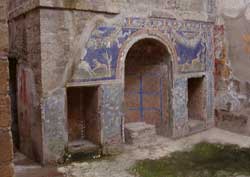
Like Pompeii, Herculaneum was buried by the catastrophic Mt. Vesuvius eruption of 79 AD. The excavated buildings of Herculaneum are better preserved.
Herculaneum
tips and insights
 A well-concealed
Herculaneum
The town was covered with nearly 20 meters (60 feet) of lava, mud, ash and other volcanic debris. Herculaneum lay hidden and forgotten for well over a millennium before it was discovered in 1709.
Yet to be
exposed
Most of the ruins are not yet excavated. No doubt surprises await future archaeologists.
Most notable
building complex
It is the Villa of the Papri. This site stockpiled 2,000 ancient scrolls before Vesuvius blew its top. Scientists are using modern multi-spectrum electronic equipment to read the scrolls (unrolling them would likely destroy them
What the
skeletons tell us
Many were found huddled in the portside buildings. Apparently, these people unsuccessfully tried to escape by boat.
Herculaneum
compared with Pompeii
It was appreciably smaller than Pompeii, but more prosperous. Herculaneum attracts far fewer tourists than Pompeii. This is a plus for travelers who like exploring archaeological sites in a quieter, more peaceful environment.
Name
Herculeum was named for the Greek god Hercules.
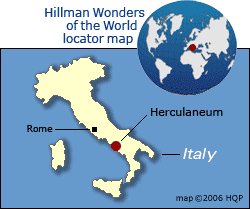
Location in Italy
Read my other Italy pages
Wonders of Italy - Complete list
Italy wonder map
Basic Italian phrases
Italian cuisine
Best time to visit Rome


World's Top 100 Wonders
World's Top 1000 Wonders
Site map
My credentials
About my website and criteria
Reader testimonials