


Spanish Steps
Travel tips you can trust

Why the
Spanish Steps
are special
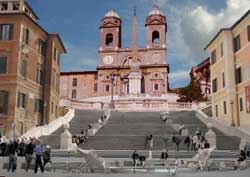
These picturesque 18th century steps climb a steep hill, connecting the piazza below with a twin-towered church and its piazza above. The Spanish Steps have become one of the world's most popular gathering places for tourists.
Spanish Steps
tips and insights
 Why
are they called
Why
are they called
the "Spanish Steps"?
The steps were commissioned by the French, yet surprisingly, bear the "Spanish" descriptive. They were named after the Spanish Embassy for the Vatican that sat (and still does) on the lower piazza.
Most famous areas
The top three are:
 Lower stairs
They are usually carpeted with seated tourists who have come to rest, people watch, and meet new and old friends. They used to lunch and savor gelatos on the Spanish Steps. Now it is illegal to eat and drink on them and the police do issue fines. Reason: To prevent the stones, which were restored in 1995, from being stained.
Trinita dei Monti church
This rose-tinged building sits above the Spanish Steps (see photo). The top of the church stairs offers a terrific view of Rome.
Boat sculpture
This renowned sculpture resides in the lower piazza. Unfortunately, when the area is busy, you cannot see much of it as visitors like to loll next to it.
Nearby
tourist draws
The area around the Spanish Steps has fashionable boutiques and upscale hotels.
Best time
of the year to come
The ideal time for visiting the Spanish Steps is mid-spring. Colorful potted azaleas garnish the scene.
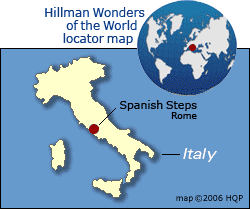
Location in Italy
Read my other Italy pages
Wonders of Italy - Complete list
Italy wonder map
Basic Italian phrases
Italian cuisine
Best time to visit Rome


World's Top 100 Wonders
World's Top 1000 Wonders
Site map
My credentials
About my website and criteria
Reader testimonials