

Europe

Acropolis
Alhambra
Amalfi Coast
British Museum
Canals of Venice
Cappadocia
Chambord Chateau
Chartres Cathedral
Colosseum of Rome
Delphi
Dubrovnik
Eiffel Tower
Fjords of Norway
Florence Cityscape
Hagia Sophia
Hermitage Museum
Kremlin
Leaning Tower of Pisa
Louvre Museum
Matterhorn
Mezquita of Cordoba
Mont-St-Michel
Neuschwanstein Castle
Pompeii
Portofino
Prague Old Town
Santorini
Sistine Chapel
St. Basil's Cathedral
St. Mark's Basilica
St. Peter's Basilica
Stonehenge
Topkapi Palace
Uffizi Gallery
Versailles

Asia

Angkor Wat
Bagan
Bali
Banaue Rice Terraces
Borobudur
Forbidden City
Golden Pavilion
Golden Temple
Great Wall of China
Hong Kong Harbour/City
Kashmir Valley
Kathmandu Valley
Ladakh
Li River Cruise
Lijiang Shargri-La
Meenakshi
Mt. Everest
Potala Palace at Lhasa
Qin Terra Cotta Warriors
Shwedagon Stupa
Taj Mahal
Temple Emerald Buddha
Varanasi/Ganges
Yangtze River Cruise

Africa & Middle East

Abu Simbel
Baalbek
Burj Al Arab
Burj Khalifa
Damascus Old City
Egyptian Museum
Jerusalem Old City
Karnak Temple
Marrakesh
Mecca
Nile River Cruise
Ngorongoro Crater
Petra
Pyramids of Egypt
Sahara Desert
Serengeti Migration
Valley of the Kings
Victoria Falls

North America

Banff National Park
Carlsbad Caverns
Chichen Itza
Grand Canyon
Metropolitan Museum
New York Skyline
Niagara Falls
San Francisco Bay/City
Teotihuacan
Yellowstone
Yosemite

South America

Amazon Rainforest
Angel Falls
Carnival in Rio
Easter Island
Galapagos Islands
Iguazu Falls
Machu Picchu
Rio Panoramic Views

Other world areas

Antarctica Cruise
Ayers Rock
Bora Bora
Great Barrier Reef

World wonders

Top 100
Top 1000

More

Site map
About me and my credentials
About my website
Reader testimonials
Email me your opinion


Sahara Desert

candid Sahara tips


Why the
Sahara Desert
is special

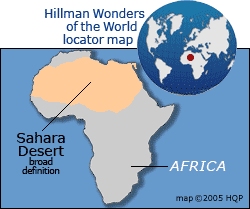
The Sahara Desert is now about 5,000 kilometers (3,000 miles) wide and up to 2,000 kilometers (1,200 miles) from head to foot, making it roughly as big as the United States.


Sahara Desert
tips & insights


How it came to be

Green vegetation blanketed the Sahara terrain 10,000 years ago, a heartbeat in geological time. Unfavorable climactic changes gradually turned this North African land into a desert of astounding size.


Still expanding

The Sahara Desert is still expanding along its southern border at an alarming rate. Some blame long-term climactic trends, others point the finger at ill-advised farming and herding techniques along the Sahara Desert fringes.


Rainfall

It seldom rains in most of the Sahara Desert. Some spots haven't seen a rain drop in years. But on those rare occasions when it rains, it can downpour.


More than just sand dunes

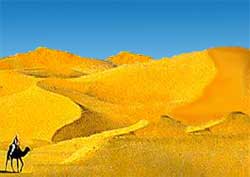
While most people envision the typical Sahara Desert landscape as rolling sand dunes (such as the landscape in the photo), in reality only 25% is sandy. The rest consists of geological features such as gravelly plains, parched plateaus and rocky mountains. The unifying attribute is extreme aridness, which predominantly defines the word "desert".


sponsored ad 

Explore my
candid country, region
and other travel guides

Click links for tips & insights


©2010 HQP / Hillman Quality Publications