


Bungle Bungle
Travel tips you can trust

Why
Bungle Bungle
is special
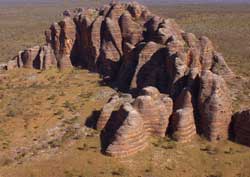
Bungle Bungle has bee-hive shaped sandstone domes that soar up to hundreds of feet high. But what makes this Australia travel wonder most exciting are the mound's alternating horizontal stratified bands - orange, gray and black. Photo shows just one of the many dome groups.
Bungle Bungle
tips & insights
 Other Bungle
Bungle features
In addition to the renowned domes, there are high-wall, palm-adorned, dry-creek gullies for hiking. The Bungle Bungle of Australia also has Aborigine rock paintings and burial grounds.
Best time to visit
May to October (the Southern Hemisphere winter) is best. May is the finest of all because it follows the wet season, which means that the otherwise barren landscape will be alive with green vegetation, colorful wild flowers, and small pools.
Least desirable
time to visit
From late November through early April, days
are likely to be uncomfortably hot, humid and rainy. And the park is closed for several months during the middle of that
period.
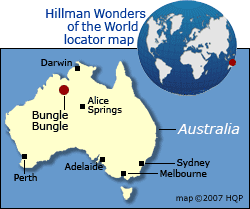
Location in Australia
Learn More
 for Bungle Bungle - Page 2
Learn my other
Australian tips and insights
Wonders of Australia - Top 10 rankings
Australian Wonders - Map
Learn Australian slang
Australian Cuisine


World's Top 100 Wonders
World's Top 1000 Wonders
Site map
My credentials
About my website and criteria
Reader testimonials