


El Escorial
Travel tips you can trust

Why
El Escorial
is special
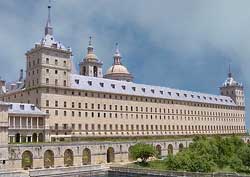
The massive El Escorial countryside building contains - under one roof - a striking royal pantheon, palace, monastery, basilica, library, school, and art collection.
Top 5
El Escorial attractions
 Royal Crypt
All but three of the kings that ruled Spain over the past five centuries are interned in this ornately stunning mausoleum.
 Basilica
Its high altar and backdrop are decorated with gold and precious artwork.
 Library
Rare historic books and manuscripts fill this richly decorated room.
 Art Galleries
You see works by master artists including Titian, Velasquez and El Greco.
 Philip II Chambers
Philip II Chambers The relative simplicity of King Philip's living quarters in Escorial reflects the lifestyle of this powerful, deeply religious king.
Why it was built
King Philip II built El Escorial (1557-84) for many purposes, including as a final resting place for his royal parents, himself, and his kings-to-be descendants.
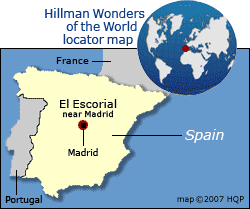
Location in Spain
Learn More
 for El Escorial - Page 2
Know these
Spain tips and insights
Wonders of Spain - Top 10 rankings
Spain wonder map
Basic Spanish phrases
Spanish cuisine


World's Top 100 Wonders
World's Top 1000 Wonders
Site map
My credentials
About my website and criteria
Reader testimonials