


xxxx
Abu Simbel
Travel tips you can trust

Why the
Abu Simbel wonder
in Egypt is special
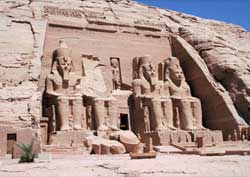
Abu Simbel is famous for its four imposing statues of the seated Pharaoh Rameses. Those sculptures guard his temple's entrance. They and the temple behind them were originally carved out of the same sandstone cliff, over three millennia ago.
Abu Simbel
tips and insights
 Why was it built?
Pharaoh Rameses II wanted to impress his Egyptian subjects of his grandeur -- and to set fear in the hearts of his formidable Nubian enemies who threatened Egypt's southern border.
Is it taller
than photos suggest?
Each of the seated Abu Simbel statues is as high as a five-story building. For scale, notice the statues standing between the pharaoh's legs -- they are life size.
Why did the
Aswan High Dam
threaten Abu Simbel?
The construction of Egypt's vast Aswan High Dam across the Nile River in the 1960s posed a problem. It would have submerged Abu Simbel and therefore lost to future scholars and tourists.
What was
the solution?
Abu Simbel was moved to higher ground. This required cutting Abu Simbel into large blocks and reassembling them on top of the cliff, safely above the rising waters. This remarkable engineering feat was accomplished by a joint Egyptian and international effort, finishing in the nick of time.
Is there another
Abu Simbel temple?
The nearby temple of the wife of Rameses is also a part of the Abu Simbel complex. That temple is an archaeological must-visit.
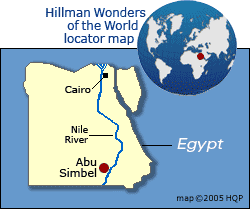
Location in Egypt
Learn More
 for my next Abu Simbel page
Read about each of Egypt's top 7
 Pyramids of Egypt at Giza
 Karnak Temple
 Nile River Cruise
 Egyptian Museum
 Valley of the Kings
 Abu Simbel
 Luxor Temple
Photo by Son of Groucho - CC BY 2.0


World's Top 100 Wonders
World's Top 1000 Wonders
Site map
My credentials
About my website and criteria
Reader testimonials