


Egyptian Museum
Travel tips you can trust
Why the
Egyptian Museum
is special
The Egyptian Museum in Cairo displays over 100,000 artifacts covering 4000 years, from 3500 BC to 500 AD
King Tut exhibit
 Room #4
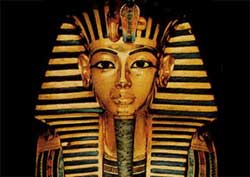
The small exhibition room #4 displays a pittance of those antiquities, but what treasures it holds. It's the main King Tutankhamun ("Tut") room, which draws travelers from around the world eager to see King Tut's famous gold burial mask, an artistic masterpiece (see photo).
That room also houses ...
King Tut's innermost coffin, made of solid gold (his mummy remains in his tomb in the distant Valley of the Kings).
About King Tut
Tutankhamun was an obscure pharaoh who died at 18, too young to have much chance to leave his mark on history. He's famous only because his precious burial treasures were miraculously found intact in 1922, untouched by the ancient tomb robbers who stripped the burial chambers of the major pharaohs. We can only imagine how magnificent the treasures in those tombs must have been.
Mummy room
Rameses II
The Egyptian Museum has more displays that render visitors speechless, including the royal Mummy Room where famous pharaohs lie in state. You come face-to-face with the exposed mummified head of Rameses II, the greatest pharaoh of all time.
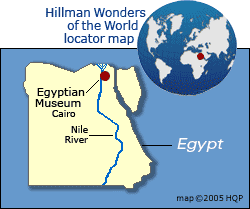
Location in Egypt
Read about each of Egypt's top 7
 Pyramids of Egypt at Giza
 Karnak Temple
 Nile River Cruise
 Egyptian Museum
 Valley of the Kings
 Abu Simbel
 Luxor Temple


World's Top 100 Wonders
World's Top 1000 Wonders
Site map
My credentials
About my website and criteria
Reader testimonials