


Travel tips you can trust

Why the
Ross Ice Shelf
of Antarctica
if special
An ice shelf is a thick plate of ice that floats on the sea (or rests on a seabed) but is still attached to the glacier that feeds it. The one of the Ross Sea is the world's largest and is as big as France.
 Iceberg B-15
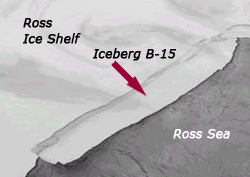
In 2000, an iceberg measuring 300 kilometers (180 miles) in length broke away from the Ross Ice Shelf. My red arrow on the satellite image (see photo) points out that elongated calved iceberg that was officially named B-15.
Small effect
Although B-15 is gigantic, its breakaway reduced the size of the Ross Ice Shelf by only two percent.
Global warming
If it were to completely melt the Ross Ice Shelf and its sister the Ronne Ice Shelf, the oceans around the world would rise and flood coastal cities like Shanghai and New York.
However, the corresponding rise in the air temperature would create enough additional snow over the Antarctica glaciers to replenish the melted ice. Note: Unfortunately, this would not be the case with northern hemisphere glaciers such as those in Greenland.
Interesting effect
The frozen ice sheet over the Ross Sea helps preserve the lifespan of the glacier that feeds it, for two reasons. It helps break the glacier's journey to the sea. And, it adds distance between the glacier and the open sea water, which has a warming effect.
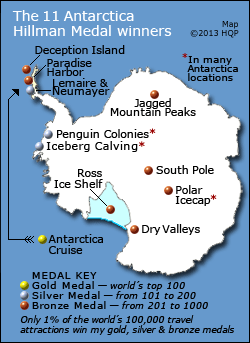
Location in Antarctica
Antarctica cruise
Deception Island
Dry Valleys
Iceberg Calving
Jagged Mountain Peaks
Lemaire & Neumayer Channels
Paradise Harbor
Penguin Colonies
Polar Icecap
Ross Ice Shelf
South Pole


World's Top 100 Wonders
World's Top 1000 Wonders
Site map
My credentials
About my website and criteria
Reader testimonials