


Tubbataha Reef
Travel tips you can trust

Why the
Tubbataha Reef
is special
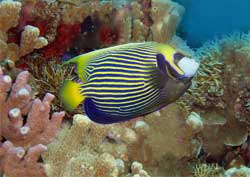
The Tubbataha (too-bah-tah-hah') Reef in the remote center of the Sulu Sea is one of the world's finest dive locations. It has a rich and dense marine life – with several hundred species of both coral and fishes.
Tubbataha Reef
tips & insights
 Diver's paradise
Tubbataha Reef is noted among divers for its abundance of vivid corals, expansive sea ferns, colorful crustaceans, magnificent turtles, chromatic small fishes, and striking large fishes. The last includes sharks, whale sharks, mantas, tuna, and barracudas. And the soaring, perpendicular underwater walls are legendary.
Limited access
Tubbataha Reef is normally accessible only three months a year, from about mid-March to mid-June. Sea conditions are too rough for the remaining 9-month span.
Best months
For the best underwater visibility and the calmest seas, go in April or May.
Getting there
You can reach Tubbataha Reef only by boat. It lies 180 kilometers (110 miles) southeast of Puerto Princesa, the capital of Palawan. The voyage lasts about 10 hours each way.
Learn More
 for Tubbataha Reef - Page 2
Learn my other
Philippine tips and insights
Top 7 Philippine Wonders
Philippine wonder map
Philippine wonder photo gallery
Best time to visit Manila
Banaue Rice Terraces
Chocolate Hills
Mayon Volcano
Pamalican Island
Taal Volcano
Tubbataha Reef
Underground River
Honorable mentions
Batad & Bangaan terraces
Banaue Rice Terraces photo gallery
Banaue Festival photo gallery
Country facts & tidbits
Learn Filipino/Tagalog phrases
Philippine cuisine

Philippine Department of Tourism
WOW Philippines

World's Top 100 Wonders
World's Top 1000 Wonders
Site map
My credentials
About my website and criteria
Reader testimonials