

|
An insightful guide
to Creole and
Cajun Cuisines for
diners and travelers
by an established authority

Why Creole and Cajun
cooking
are special
Creole and Cajun are two of America's most original cuisines. They are also two
of its best.


Location
New Orleans is the home of Creole Cuisine. Just east lies the heart of the
secluded bayous, Cajun territory.

How Creole and
Cajun cuisines differ
Originally, the neighboring Creole and Cajun cuisines were markedly different.
Over the centuries, the distinctions between the two blurred as cooks on both sides adopted each other's dishes.
However,
food mavens can spot the unique qualities because the cooks of each cuisine
modified the borrowed dishes in keeping with their culinary heritage (see my
Cuisine Insights section later on this page for details).
Generally, Creole Cuisine is
urbane while Cajun Cuisine is country style. Take Jambalaya as an illustration.
The Creole version is more citified and complex, the Cajun, more down-home and straightforward. Both are
delicious.

Famous
dishes to try
How many of these Creole and Cajun specialties have you tasted?

Crawfish
Étouffée

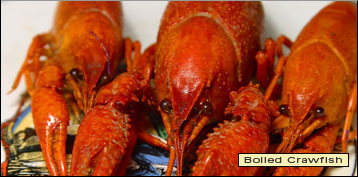
The crawfish (which look like miniature lobsters) are slowly braised in a small
quantity of a
seasoned tomato mixture. The Crawfish Étouffée is then served over steaming rice.

Gumbo

Made with chicken, seafood and/or sausage. Can also be vegetarian. A gumbo
is thickened with fresh okra ("gumbo" is West Africa) or ground dried
sassafras leaves (filé powder).

Jambalaya

A seasoned mélange of meat (pork, seafood and/or sausage), vegetables and rice
is cooked in one pan.
Jambalaya is similar to and was influenced by Spain's paella.

Oysters
Rockefeller

Oysters on the half shell are seasoned, set on a bed of rock salt, then
broiled. Oysters Rockefeller may or may not contain spinach, depending on the
chef.

Red
Beans and Rice

Kidney beans and rice are piqued with seasonings and with ham or sausage
morsels. Served on a mound of rice.

Other renowned specialties

Alligator
The tail meat of the alligator is typically fried or braised - or ground into sausage
meat.

Andouille
Smoked, seasoned sausage made with course-ground pork. An andouille is
eaten directly or used as a flavoring ingredient.

Bananas
Foster
Sliced bananas are flavored with cinnamon and brown sugar, then
fried, then flambéed with a liqueur. Bananas Foster is served with vanilla ice cream.

Boudin
Blanc
Seasoned sausage made with coarse-ground pork (often rice is added). The Cajun Boudin Blanc is heartier than the
original French version.

Chicory
Coffee
Brew is flavored with a touch of a ground roasted root. Chicory
Coffee is the standard coffee in New Orleans.

Dirty
Rice
Rice cooked with poultry giblets, which darkens its color.

Po-Boy
New Orleans most famous sandwich can be stuffed with almost anything,
though the shrimp, oyster and roast beef versions are exceptionally popular. A Po-Boy (poor
boy) style sandwich is known elsewhere in America by various names, including
grinder, hero, hoagi, and sub.

Sazerac
Cocktail
Potent. Made with whiskey, sugar and bitters. A local favorite.

Creole and Cajun
Cuisine insights

Origin
Creole Cuisine was fashioned by early French and Spanish immigrants, and
by African slaves. Cajun Cuisine was created by the French Acadians (later
shortened to Cajuns) and by major contributions from Native Americans.

Different
lifestyles
Creole Cuisine materialized in New Orleans, a city with sophisticated
tastes inherited from its refined French and Spanish immigrants. Black slave
cooks added their creative touches. Elaborate
sauces and complex cooking methods ensued.
In
contrast, Cajun Cuisine emerged among a people who lived a hard life in the
bayous, with a limited variety of cooking ingredients. They had to make do with
what they had. An unfussy, down-home style of cooking emerged, without culinary
bells and whistles. Yet, like New Orleans residents, they developed a splendid
cuisine because they loved and demanded good cooking.

Cajun
food myths
In the 1980s some out-of-state food writers and Cajun restaurants spread
misconceptions about Cajun food that linger on:
“It
is as hot as Sichuan and Mexican foods.”
Fact: Cajun cooks enthusiastically
season with chili, but not to a palate-scorching degree.
“Blackened
Redfish is a Cajun specialty.”
Fact: It was invented several decades ago in
a New Orleans restaurant catering to local residents and tourists.
“Turducken is a Cajun specialty.”
Fact:
The conversation-piece Turducken preparation (a de-boned chicken inside a
de-boned duck inside a de-boned turkey) is not a traditional Cajun dish.

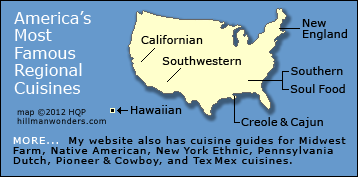
Click an American region to
learn about its cuisine
and famous dishes


|