


Bali
arts and crafts
Travel tips you can trust
Why the arts
and crafts of Bali
are special
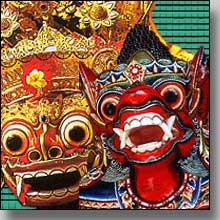
On a per capita basis, Bali probably has the most accomplished artists & craftsmen in the world. To the Balinese, personal artistic achievement is part of the religious experience
Balinese painting
 Ignored
For centuries, the international art world paid little heed to the talented Balinese painters, who focused on traditional motifs geared for Bali's temples and religious ceremonies.
Evolution
Then, in the late 1920s several expatriate European artists (including the now renowned Walter Spies and Rudolf Bonnet) successfully taught and encouraged some Balinese artists to become more modern and daring by capturing scenes of everyday Bali life and landscapes. Today, this work is globally recognized as fine art.
Ubud
Bali's painting capital is Ubud village, followed by the villages of Batuan and Samasan. The first is more eclectic and contemporary in style while the latter two specialize in Bali's traditional Wayan style.
Neka Museum
The best way to introduce yourself to Balinese paintings is by visiting the Neka Museum and other leading art institutions (click the "runners-up" link for their capsule descriptions).
Learn More
 for Arts and Craft - Page 2
Read my Bali pages

 Rice terraces
 Dance & music
 Arts & craft
 Temples
 Ubud
Ubud
 Sports
 Luxury resorts
 Kuta
Kuta
 Food
Food
 Beaches

Bali tip sheet
Bali attraction map
Best 5 nearby islands


World's Top 100 Wonders
World's Top 1000 Wonders
Site map
My credentials
About my website and criteria
Reader testimonials